
image

MBBR Moving Bed Biofilm Reactor

As wastewater treatment technologies continue to evolve, systems that take up less space and provide high-quality effluent are gaining prominence. Moving Bed Biofilm Reactor (MBBR) technology is an innovative approach that incorporates the media form of suspended growth systems.

What is MBBR Moving Bed Biofilm Reactor ?

The MBBR process belongs to a group of systems called hybrid processes, which incorporate a type of media (filler material) into a suspended growth reactor. MBBR uses small, cylindrical polyethylene media elements placed in the aeration tank to support biofilm growth. These media carriers are approximately 10 mm in diameter and 7 mm thick. The reactor tank can be agitated using aeration or mechanical mixers. At the system outlet, a perforated plate or screen is installed to prevent the media from being lost with the wastewater.

MBBR is a surface-growing (attached growth) process that can be used for BOD removal as well as nitrification and denitrification.
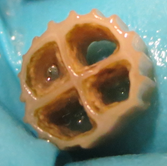
K1 MBBR carrier with biofilm

Where was it invented?

Moving-bed biofilm reactor (MBBR) is a type of wastewater treatment process that was first invented by Professor Hallvard Ødegaard at Norwegian University of Science and Technology in the late 1980s

What Are the Advantages of MBBR Moving Bed Biofilm Reactor ?

The key advantages offered by the MBBR process make this technology highly attractive for wastewater treatment:

  • Continuous Operation and Clogging Resistance: The reactor can operate continuously without the threat of clogging.
  • No Backwash Requirement: The system does not require backwashing.
  • Low Sludge Recirculation: Sludge recirculation is not required.
  • High Biofilm Surface Area: It has a high specific biofilm surface area.
  • Low Head Loss: Low hydraulic head loss is observed in the system.
  • Capacity Increase and Upgrade: Existing activated sludge processes can be upgraded to the MBBR process to handle increased loads without the need to expand the reactor volume. This can be achieved by adding more biofilm carrier elements to the reactor.
  • Reduced Sludge Production: Long Sludge Retention Time (SRT) leads to less sludge production (MBBR, MBR provide long SRT).

Why is MBBR preferred?

Where is it Used?
MBBR has a wide range of applications in both municipal and industrial wastewater treatment.

  • Organic Matter and Nutrient Removal: The MBBR process can be used in aerobic, anoxic, or anaerobic processes for carbon and nitrogen removal. It is specifically suited for BOD removal, nitrification, and denitrification.
  • Capacity Increase of Existing Treatment Plants (Retrofitting)
  • MBBR is also widely applied in the treatment of industrial wastewater with high organic load or variable flow rate.
  • MBBR systems are mostly used in the treatment of domestic wastewater (organic pollutants containing BOD, COD, nitrogen and phosphorus).
  • Thanks to the biofilm reactor structure, microorganisms adhere to surfaces, preserving biological activity even at low temperatures. This provides an advantage in cold climate regions.

Areas of MBBR Application

MBBR systems are used in a wide variety of areas requiring high treatment quality:

  • Municipal wastewater
  • Residential areas
  • Small towns.
  • Hospitals
  • Tourist facilities
  • Military Bases

Get an Offer