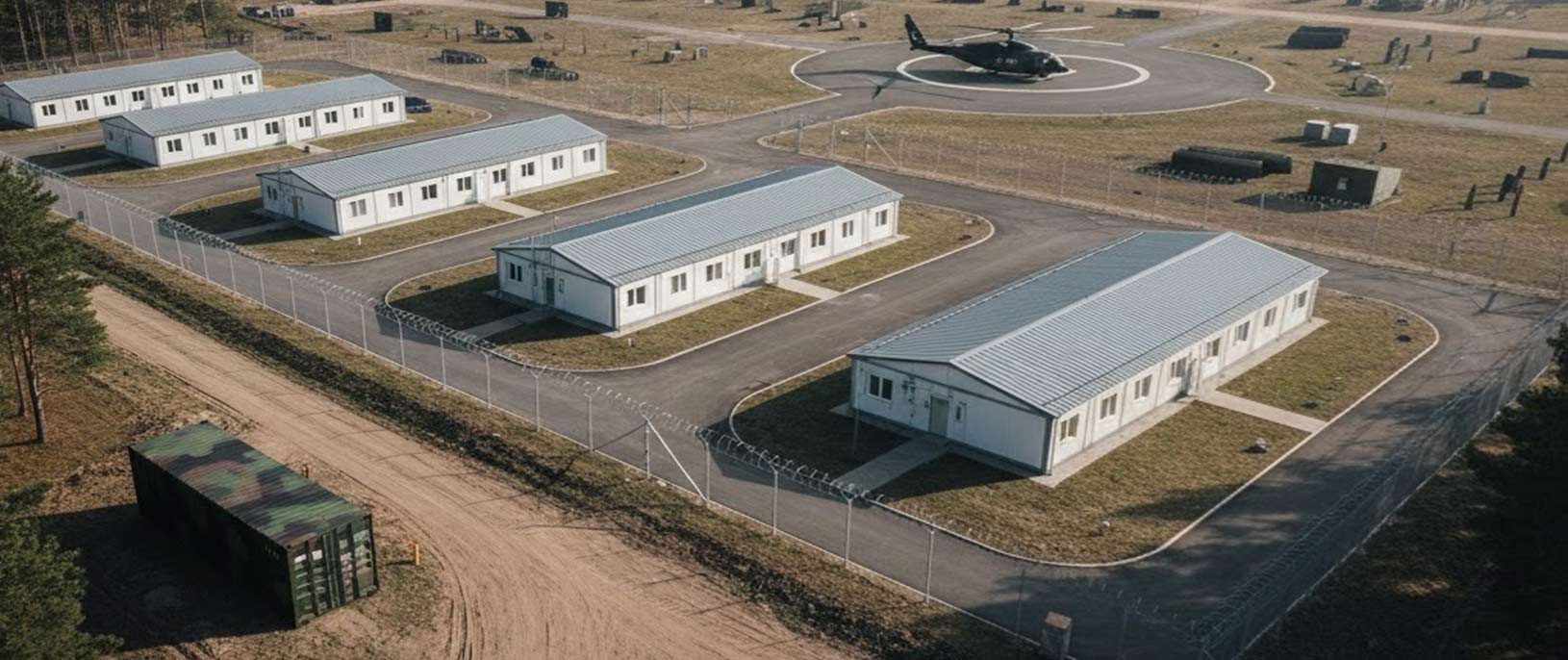
Mobile Wastewater Treatment for Military - Army Bases & Camps
Domestic Wastewater Sources in Military Camps
Domestic wastewater generated in military camps originates from many different activities within the camp. These include restrooms, showers, laundries, mess halls, and kitchens used by soldiers. Cleaning operations in training and exercise areas, as well as field kitchens, are also significant sources of wastewater.
This diversity makes wastewater generated in military camps more complex than domestic wastewater. Both the number of people and water use in camps vary significantly depending on the time of day and the intensity of operations.
The character of wastewater in military camps is generally characterized by high organic loads and sudden flow rate changes. Shower use, communal meal preparations, and cleaning activities, especially in the morning and evening, can place a high load on the treatment system in a short time. This can strain the balance of biological treatment systems.
Furthermore, the detergents, oils, and cleaning chemicals used in camps also affect the chemical composition of the water. Therefore, systems must be resistant to both biological and chemical contaminants.
Technical Specifications by Camp Type
The amount and composition of wastewater vary depending on the camp's size, whether it is permanent or temporary, and the number of troops. A small outpost does not create the same level of load as a large military base with thousands of people.
In non-permanent, temporary-duty camps, portable and quickly deployable treatment systems are preferred. In permanent bases, energy efficiency and ease of maintenance are paramount.
Population Equivalent and System Design
When designing a military camp's wastewater treatment system, the camp's population is considered the "population equivalent (PE). However, not only the number of people but also their usage habits are taken into account. For example, due to heavy use of showers and mess halls, daily per capita water consumption is generally higher than in civilian settlements.
The system's energy consumption, ease of maintenance, level of automation, and durability are critical to its sustainability in military settings.
Variable Flows and Peak Loads
Water use in military camps is highly variable. During drill periods, with increased personnel, the system can experience sudden high loads. Conversely, at night or during periods of reduced workload, flow can come to a near standstill. Therefore, modern treatment systems must be able to adapt to these variable flow rates through automatic control.