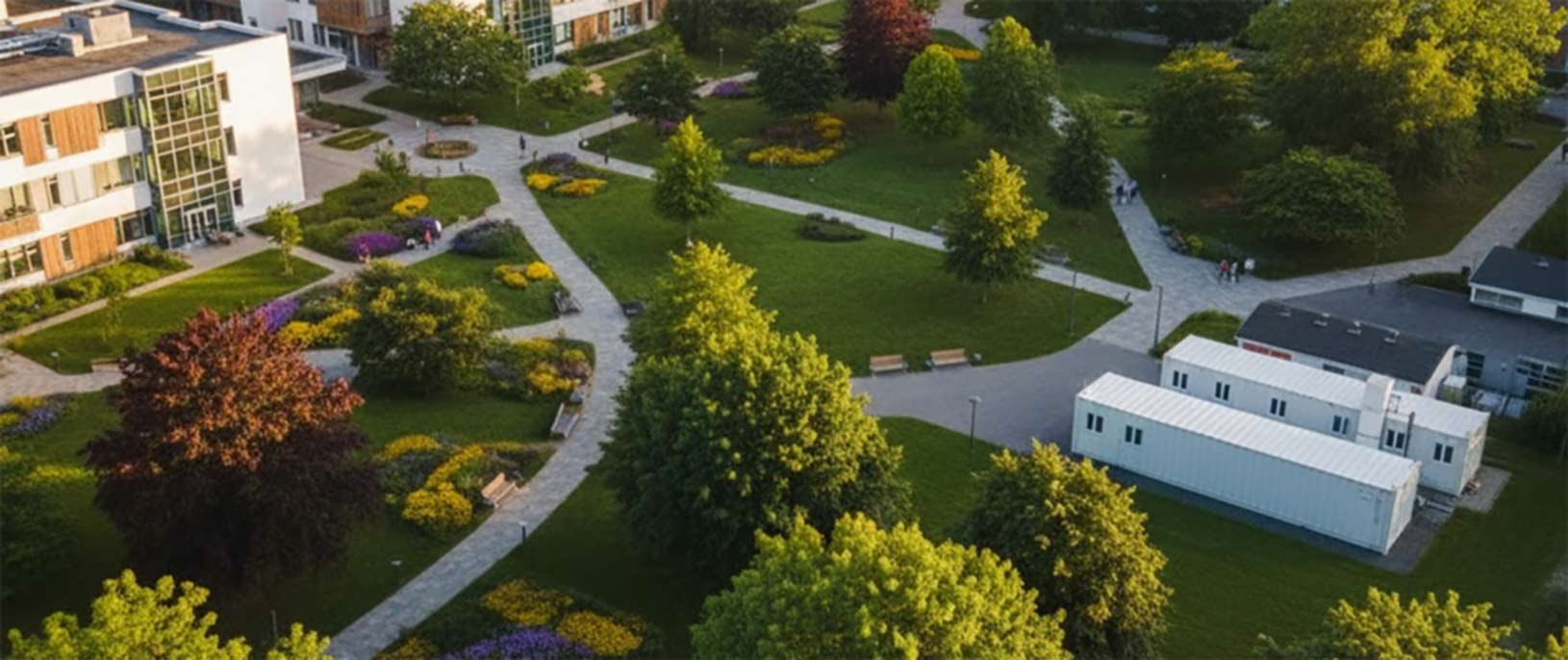
The Importance of Mobile Domestic Wastewater Treatment Plants in Schools
1. Understanding School Wastewater:
Properties and Sources Wastewater generated in schools generally exhibits the characteristics of domestic wastewater. Mobile Domestic wastewater treatments primarily originates from human feces, inorganic solids already present in kitchen and bathroom water, and drinking water. Domestic wastewater contains organic and inorganic substances in suspended, colloidal, and dissolved forms.
Approximately 75% of the suspended solids and approximately 40% of the filterable solids in moderately polluted wastewater are organic in nature. Typical organic compounds found in domestic wastewater include proteins, carbohydrates, fats, petroleum residues, and urea.
The amount of wastewater generated in public facilities such as schools can be calculated based on unit values per student. According to sources, daily water consumption per student in schools ranges from 15 to 25 liters. In rural or scattered settlements where schools are located, establishing a centralized wastewater collection and treatment facility can often be difficult or impossible. In such places, wastewater disposal should be carried out in on-site facilities.
2. Solutions for Small Settlements (School Projects)
Mobile or packaged plants (Package Plants) are generally important for Schools with a population of less than 1,000 or small settlements (N<2,000 people). Packaged treatment plants are generally manufactured with capacities ranging from 10 to 400 m³/day. Therefore, Mobile Domestic wastewater treatments in schools are great solutions for that are not dependent on city centre infrastructure.
Advantages of packaged plants include:
1. Quick installation.
2. Requires fewer engineering services during the design phase.
3. Can be used even in areas where aesthetics are important (Schools, tourist facilities, resorts, etc.).
The most commonly applied packaged processes are modifications of activated sludge systems:
Mobile domestic wastewater treatment plants are crucial for schools. Preventing water waste and recycling are crucial for irrigating green spaces.
3. Advantages of Mobile Wastewater Treatment Plants for Schools
The specific advantages of mobile wastewater treatment plants for schools are related to the general benefits of small treatment systems:
- Centralized System Alternative: They enable harmless, on-site wastewater disposal in dispersed communities (such as schools in rural areas) where a sewer network is not available or is uneconomical to install.
- Space Savings and Flexibility: Compact technologies such as MBR or packaged plants offer advantages on school campuses or in narrow areas with limited space.
- Environmental Awareness: After treatment, wastewater is discharged under control into the receiving environment (surface water or groundwater), preventing environmental contamination.
- Health Protection: Proper wastewater management prevents the spread of hazardous waste, insects, diseases, and epidemics.